
Fire Extinguisher Guide
In the UK, fire extinguishers are colour-coded to help people quickly identify and use them in a worst-case fire scenario. Understanding the various types of fire extinguisher and their corresponding colours is crucial for ensuring safety in homes, workplaces, and public spaces. This guide covers the five types — Red (Water), Cream (Foam), Blue (Dry Powder), Black (CO2), and Yellow (Wet Chemical) — the fire classes they address, and their specific applications.
A breakdown of the different types of fire extinguisher
Use the following chart to cross reference which type of fire extinguisher can be used for the different fire classes.
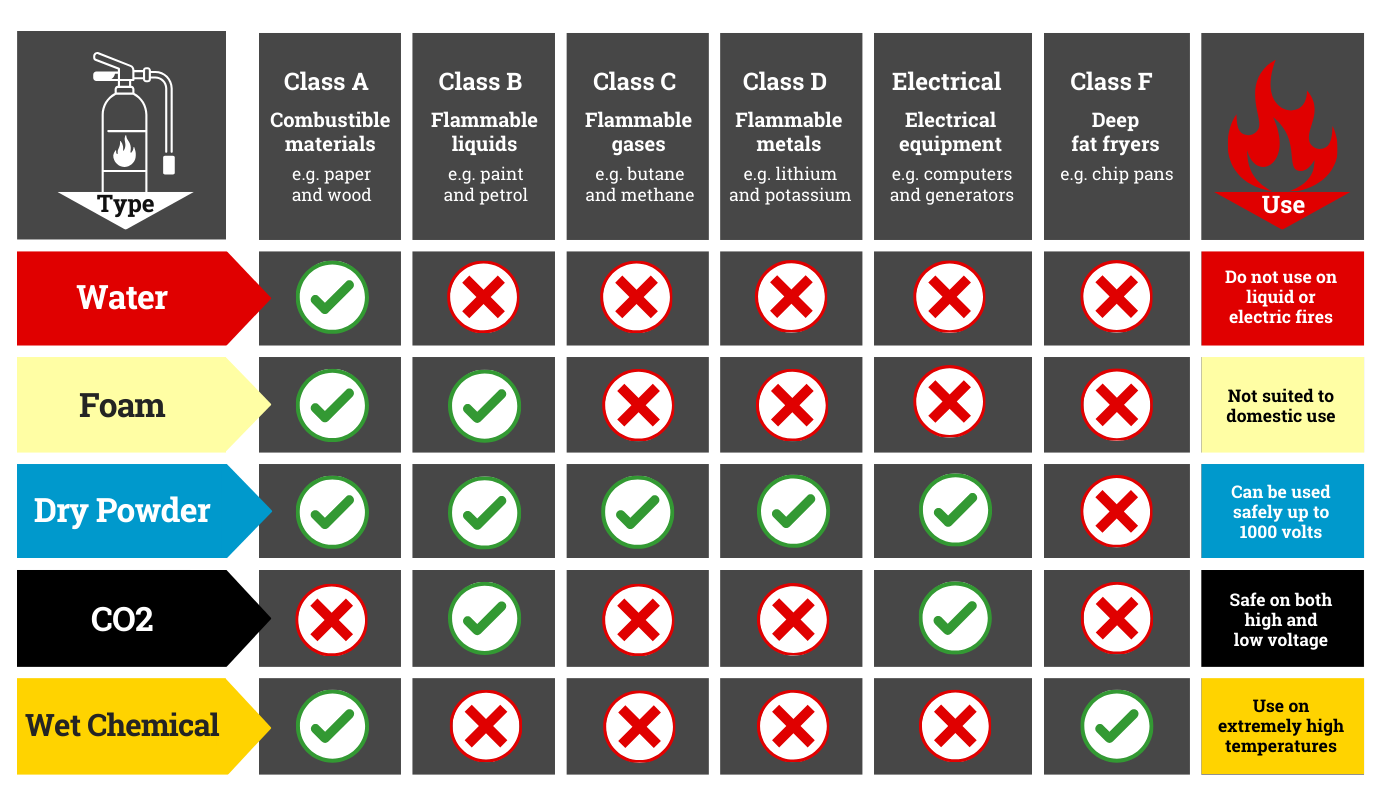
| Fire Extinguisher Types | Fire Class Types | Use | ||||||
|---|---|---|---|---|---|---|---|---|
| Class ACombustible materialse.g. paper and wood | Class BFlammable liquidse.g. paint and petrol | Class CFlammable gasese.g. butane and methane | Class DFlammable metalse.g. lithium and potassium | ElectricalElectrical equipmente.g. computers and generators | Class FDeep fat fryerse.g. chip pans | Class LLithium-ion battery firese.g. E-scooters, EV batteries | ||
| Water | ✓ | ✗ | ✗ | ✗ | ✗ | ✗ | ✗ | Do not use on liquid or electric fires |
| Foam | ✓ | ✓ | ✗ | ✗ | ✗ | ✗ | ✗ | Not suited to domestic use |
| Dry Powder | ✓ | ✓ | ✓ | ✓ | ✓ | ✗ | ✗ | Can be used safely up to 1000 volts |
| CO2 | ✗ | ✓ | ✗ | ✗ | ✓ | ✗ | ✗ | Safe on both high and low voltage |
| Wet Chemical | ✓ | ✗ | ✗ | ✗ | ✗ | ✓ | ✗ | Use on extremely high temperatures |
| Lithium Battery (AVD) | ✓ | ✗ | ✗ | ✗ | ⚠ | ✗ | ✓ | Check manufacturer certification |
Knowing the fire extinguisher types
Five types of fire extinguisher help extinguish the various fire types.
- Water (Red)
- Foam (Cream)
- Dry Powder (Lilac/Blue)
- Carbon Dioxide CO2 (Black)
- Wet Chemical (Yellow)
Water Fire Extinguishers (Red)
Overview: The water extinguisher, identifiable by its red label, is the most traditional and widely recognised. It is specifically designed to tackle Class A fires involving common combustible materials such as wood, paper, and textiles. The simplicity of its operation and the general availability of water make it a popular choice in various settings.
However, water conducts electricity and can spread burning oil or fat, making these extinguishers unsuitable for electrical, cooking oil, and flammable liquid fires.
Typical use
Effective on paper, wood and fabric
Exclusions
Never use on electrical fires, oil, or fat fires
Locations
Ideal for schools, offices, and domestic premises

Typical use cases for water fire extinguishers

Water fire extinguishers are particularly effective for settings with a high presence of organic, combustible materials. They should be avoided in situations involving electrical equipment, flammable liquids, or cooking oils.
Educational Institutions
Schools, colleges, and universities often have combustible materials like paper, wood, and textiles. Water extinguishers are suitable for classrooms, libraries, and administrative areas.
Retail and Commercial Buildings
Retail environments often contain Class A combustibles. Water extinguishers can be used for fires involving merchandise, display materials, and decorations.
Offices and Workspaces
In office environments, water extinguishers are effective against fires involving paper, wood, and fabric. They can be used for fires from waste bins, desks, chairs, and shelving.
Domestic Residences
Water extinguishers are effective for common household fires involving furniture, textiles, and paper products. They are suitable for living areas, bedrooms, and home offices.
Public Buildings and Venues
Places like theatres, museums, and galleries benefit from water extinguishers for tackling fires in seating areas, stages, and display rooms.
Warehouses and Storage Facilities
Warehouses storing solid combustible materials such as boxed goods, paper, and wood can benefit from water extinguishers.
Historical Buildings
Water extinguishers are a primary choice for controlling fires in buildings with wooden structures and furnishings without risk of chemical damage.
Airbnb and Holiday Rentals
Water fire extinguishers are crucial in short-term rentals for quickly suppressing Class A fires involving common household materials, ensuring guest safety.
Foam Fire Extinguishers (Cream)
Overview: Foam fire extinguishers, marked with a cream label, are versatile and effective on both Class A (solid combustibles) and Class B (flammable liquids) fires. By creating a blanket of foam, they effectively smother the flames, cutting off the oxygen supply and preventing re-ignition.
Foam extinguishers are particularly valued in environments where flammable liquids are stored or handled, such as garages, workshops, and industrial sites. Their capability to tackle a wide range of fires makes them a preferred choice for both commercial and residential fire safety.
Typical use
Effective on fires involving solids and flammable liquids
Exclusions
Not suitable for kitchen fires or those involving electrical equipment
Locations
Commonly found in business premises, warehouses, and garages

Typical use cases for foam fire extinguishers

Foam extinguishers form a cooling blanket over the fire, cutting off the oxygen supply and suppressing flames. They are ideal for situations involving flammable liquids like petrol or paint but are also effective on solid combustibles.
Industrial and Manufacturing
These settings often deal with flammable liquids such as paints, solvents, and fuels. Foam extinguishers are ideal for rapidly suppressing fires involving these substances without risk of re-ignition.
Garages and Vehicle Repair Shops
There is a risk of petrol and diesel fires in areas where vehicles are present. Foam extinguishers are well-suited for such environments as they can effectively combat liquid fuel fires.
Warehouses and Storage Units
Foam extinguishers are helpful in warehouses storing both flammable liquids and solid materials like wood, paper, and textiles, providing a versatile fire-fighting solution.
Office Buildings
In office areas with a higher risk of flammable liquid fires, such as maintenance areas or where cleaning chemicals are stored, foam extinguishers can be helpful.
Hospitality and Catering Facilities
Foam extinguishers can be used for fires involving flammable liquids, but are not suitable for cooking oil fires (Class F). They work as a secondary choice in general catering areas.
Boats and Marine Applications
Foam extinguishers can be effective for boat fires, especially in engine areas where fuel fires are risky. The extinguisher has an additional MED-type approval.
Aviation Facilities
Foam extinguishers can be used at airports and in hangars to extinguish flammable liquids. Aviation fuels like heptane require specialist foam extinguishers.
Fuel Storage Areas
Locations where large quantities of fuel are stored, such as fuel depots or reserve tanks, can benefit from foam extinguishers which are effective on liquid fires.
Dry Powder Extinguishers (Blue)
Overview: Dry Powder fire extinguishers, marked with a lilac/blue label, are highly versatile and can be used on Class A, B, C, D and electrical fires, making them suitable for a variety of environments. Their firefighting prowess stems from a powder formula that interrupts the chemical reaction of fire, effectively smothering flames across a variety of materials.
This broad applicability makes them ideal for industrial settings, garages, and vehicles where these fire types are prevalent. However, their use can result in visibility issues and potential damage to electrical equipment due to residue. Note: the colour code for Class D powder extinguishers (metal fires) has changed from Blue to Signal Violet. See BAFE.org.uk for more information.
Typical use
Highly versatile — Class A, B, C and electrical fires
Exclusions
Not recommended for use in enclosed spaces
Locations
Industrial usage such as factories, workshops and garages

Typical use cases for dry powder fire extinguishers

Dry powder fire extinguishers are an excellent choice for areas with multiple types of fire risks, especially where flammable liquids, gases, or electrical risks are present. However, their use requires caution in enclosed spaces and where there is a risk of re-ignition.
Industrial and Manufacturing
Dry powder extinguishers are invaluable in manufacturing plants and industrial sites where there is a risk of fires involving gases, liquids, and solids.
Garages and Vehicle Repair Shops
These areas often deal with flammable liquids like petrol and oils and electrical risks. Powder extinguishers are effective for quickly suppressing fires involving vehicle fuels and electrical components.
Workplaces with Mixed Fire Hazards
In workplaces where the fire risk is varied — combustible materials, flammable liquids, and gases — powder extinguishers offer a versatile solution.
Vehicles and Transportation
For marine environments, especially in engine and fuel storage areas, dry powder extinguishers are suitable for tackling fires involving flammable liquids and gases.
Chemical Storage Facilities
In areas where chemicals that might be flammable or reactive are stored or handled, dry powder extinguishers can provide effective fire suppression.
Boats and Marine Applications
For marine environments, especially in engine and fuel storage areas, dry powder extinguishers are suitable for tackling fires involving flammable liquids and gases.
Garage Forecourts
Dry powder extinguishers are essential in garages and petrol forecourts, effectively handling fires from fuel spills, leaks, and electrical faults, providing rapid suppression in these high-risk areas.
Fuel Storage Areas
Powder extinguishers are beneficial in locations where flammable liquids or gases are stored, such as fuel depots, gas storage facilities, and marinas.
Carbon Dioxide (CO2) Extinguishers (Black)
Overview: Carbon Dioxide (CO2) fire extinguishers, recognised by their black label, are specifically designed for electrical fires and are also effective on Class B (flammable liquid) fires. CO2 extinguishers work by displacing oxygen around the fire and removing the heat with a cold discharge, effectively suffocating the fire without leaving any residue.
This makes them ideal for use on electrical fires in offices, data centres, and server rooms, as they cause no damage to electrical components and machinery. Their non-conductive nature ensures safety during use on electrical fires, but they are not suitable for Class A (solid combustibles) or Class F (cooking oils/fats) fires.
Typical use
Effective on fires involving electrical equipment and flammable liquids
Exclusions
Ineffective on Class A, C, and D fires
Locations
Essential in offices, server rooms, and areas with electrical equipment

Typical use cases for CO2 fire extinguishers

CO2 fire extinguishers are ideal for environments with a lot of electrical equipment or where flammable liquids are present. Their ability to extinguish fires without leaving residue makes them a critical tool in protecting sensitive equipment from fire damage.
Electricals and Server Rooms
CO2 extinguishers are perfect for fires in electrical equipment as they do not leave any residue. They are widely used in server rooms, data centres, and areas with significant electrical installations.
Offices with Electrical Equipment
In modern offices equipped with computers, printers, and other electronic devices, CO2 extinguishers are essential for safely extinguishing any electrical fire without damaging the equipment.
Industrial and Manufacturing
For industries that use electrical machinery or have areas with a high concentration of electrical equipment, CO2 extinguishers provide an effective fire-fighting solution.
Kitchens and Catering Establishments
While unsuitable for cooking oil fires, CO2 extinguishers can be used in kitchens for electrical fires such as those involving electrical cooking appliances.
Laboratories and Research Facilities
In environments with many electronic instruments, such as research labs or pharmaceutical facilities, CO2 extinguishers are ideal for tackling any fire involving these devices.
Entertainment Venues
CO2 extinguishers protect delicate electronics and ensure quick cleanup with minimal damage to valuable equipment in theatres and concert halls.
Vehicle and Aircraft Maintenance
In locations where flammable liquids are stored or handled, CO2 extinguishers can effectively handle any fire outbreak without leaving a residue.
Flammable Liquid Storage Areas
CO2 extinguishers are beneficial in theatres and concert halls, where electrical equipment and flammable materials mix, as they extinguish fires without residue.
Wet Chemical Extinguishers (Yellow)
Overview: Wet chemical fire extinguishers, identified by their yellow label, are specially designed for Class F fires, particularly those involving cooking oils and fats, and are typically found in commercial kitchens. When discharged, they utilise a solution that reacts with the burning oil to form a soap-like substance, effectively cooling and smothering the fire to prevent re-ignition.
The saponification process is unique to wet chemical extinguishers, making them indispensable in environments with deep-fat fryers and other cooking appliances. Their effectiveness in quickly extinguishing potentially devastating kitchen fires makes them a crucial tool in commercial cooking settings.
Typical use
Effective on cooking oil and fat fires
Exclusions
Limited use on other fire types
Locations
A must-have in commercial kitchens and food processing areas

Typical use cases for wet chemical fire extinguishers

Wet chemical fire extinguishers, identified by their yellow label, are specially designed for Class F fires, particularly those involving cooking oils and fats. They are a critical tool in specific environments where these types of fires are a high risk.
Catering Businesses
Catering companies should have wet chemical extinguishers on hand, especially those with mobile cooking units or temporary kitchen setups involving cooking with oils and fats.
Food Processing Plants
In facilities where large quantities of oils and fats are used or produced, these extinguishers are vital for quickly suppressing fires specific to these materials.
Schools and University Canteens
Wet chemical extinguishers are essential in school and university canteens to combat fires caused by cooking oils and fats, ensuring rapid suppression and preventing re-ignition.
Hotels and Hospitality
Kitchens in hotels and hospitality venues, which serve large numbers of people and often use extensive cooking equipment, should be equipped with wet chemical extinguishers.
Street Food and Food Trucks
For mobile food vendors and food trucks, where space is limited and cooking is done in close quarters, a wet chemical extinguisher is crucial for safety.
Bakeries and Pastry Shops
These establishments often deal with cooking oils and fats, making wet chemical extinguishers a necessary safety tool.
Care Homes and Hospitals
Kitchens in care homes and hospitals, which operate similarly to commercial kitchens, also benefit from the presence of wet chemical extinguishers.
Commercial Kitchens
Wet chemical extinguishers are essential in restaurants, cafeterias, and other commercial cooking environments for extinguishing fires caused by overheating cooking oils in deep-fat fryers and pans.
Other Fire Safety services
Total Client Protection Since 2004
At IPS, your security is our priority. You need dependable protection 24/7, 365 days a year, and for that reason, our engineers are always available. You can depend on us to ensure you are always protected.
100% Independent
We're fully independent, providing unbiased solutions tailored just for you.
Expertise
Decades of industry experience to deliver state-of-the-art security and fire protection.
Customer-First
Your safety is our top priority. We're committed to exceeding your expectations.
Comprehensive Coverage
From risk assessments to 24/7 monitoring, we are your one-stop service provider.
Trusted by Leading Businesses








Get Expert Fire-Safety Help
Not sure which fire protection equipment is right for your site? Our experts will review your needs and recommend the best solution, no obligation, no pressure. Call the team on 0333 444 5 999 or use the form below.
Our Priority is You
From your first question to ongoing support, we are here to make fire safety simple. Whether you are just getting started or reviewing your current setup, you will get expert advice, no pressure, and support you can rely on.
- Nationwide coverage
- Fire safety experts
- No-obligation advice
- Trusted by UK businesses
- Support 24/7, 365 days a year